

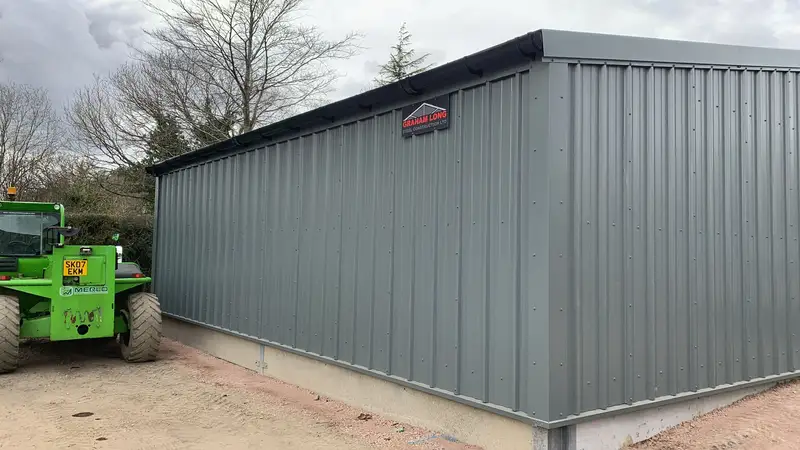
One of the most common questions we get asked is whether planning permission is needed for a new agricultural building. The short answer is: it depends on the size of your holding, the size of the building, and where it's going. Here's a plain-English guide to the rules as they stand in England.
Permitted Development Rights
Under the Town and Country Planning (General Permitted Development) Order, agricultural buildings on established farms can often be built without a full planning application. These are known as "permitted development rights" and they fall under two main categories:
Holdings Over 5 Hectares (Class A)
If your agricultural holding is more than 5 hectares (about 12.5 acres), you have the most flexibility. Under Class A permitted development, you can erect or extend an agricultural building provided:
- The building is reasonably necessary for the purposes of agriculture on the holding
- The ground area of the building (together with any other buildings erected in the last 2 years) does not exceed 1,000 square metres
- The height does not exceed 12 metres (or 3 metres if within 3km of an aerodrome)
- No part of the building is within 25 metres of a trunk or classified road
- The building is not on a separate parcel of land less than 1 hectare
Even under permitted development, you'll still need to submit a Prior Notification application to your local council at least 28 days before work starts. This gives them a chance to assess the siting, design and appearance. It's not a full planning application, but it does need to be done properly.
Holdings Between 0.4 and 5 Hectares (Class B)
Smaller holdings between 0.4 and 5 hectares have more limited permitted development rights under Class B:
- You can erect or extend buildings, but the total ground area of buildings (erected in the last 2 years) cannot exceed 465 square metres
- The height limit is 12 metres (or 3 metres near an aerodrome)
- The same 25-metre setback from classified roads applies
- Prior Notification is still required
When You WILL Need Full Planning Permission
You'll need to submit a full planning application if:
- Your holding is under 0.4 hectares (about 1 acre) -no permitted development rights at all
- The building exceeds the size or height limits above
- The building isn't genuinely for agricultural use
- Your land is in a National Park, AONB, Conservation Area, World Heritage Site or SSSI -the rules are stricter in designated areas
- You want to build within 25 metres of a classified road
- The holding hasn't been used for agriculture for at least the previous year
Important Things to Remember
- Prior Notification is not optional -even if your building qualifies under permitted development, you must notify the council. Building without doing so can result in enforcement action.
- "Reasonably necessary" is key -the building must be genuinely needed for agriculture. A council can refuse Prior Notification if they don't believe the building is justified.
- Building Regulations -agricultural buildings are often exempt from Building Regulations, but this depends on the building's use and whether people will be working in it regularly. Check with your local Building Control office.
- Environmental Impact -larger developments may need an Environmental Impact Assessment (EIA) screening. Your council can advise on this.
- Rules change -permitted development rights are updated from time to time. Always check the current regulations or get professional advice before starting work.
Our Advice
We've been building agricultural structures across East Sussex for years, and we've seen plenty of projects held up because the planning side wasn't sorted out properly from the start. Our advice is simple: check with your local planning authority before you do anything else. A quick phone call or a Pre-Application Enquiry can save you months of delays and thousands in wasted costs.
We're happy to help with the practical side -we know what councils look for in terms of siting, materials and design, and we can work with you to make sure your Prior Notification goes through smoothly.
Disclaimer: This article is for general guidance only and is based on the rules as we understand them at the time of writing. Planning law can be complex and changes over time. Always seek professional planning advice or contact your local planning authority before starting any building work.
Need help with your project?
Give Graham a call to discuss your building requirements and we can advise on the next steps.